Loading...
Serving Ennis, TX and surrounding areas. (469) 881-8137
Advanced Ennis Insulation delivers commercial insulation, attic insulation, and spray foam services to Mansfield property owners - with crews experienced in the Tarrant County market, the city's mix of newer subdivisions and established neighborhoods, and a 2019 start date that means we have worked through multiple seasons of Texas heat and winter freezes here.
Mansfield has both a substantial residential base and a growing commercial corridor along US-287. The insulation needs here range from master-planned subdivision attics to retail and warehouse buildings that run their HVAC hard all summer.
Mansfield's commercial growth along US-287 and Matlock Road has brought a steady wave of retail spaces, light industrial buildings, and mixed-use developments that need insulation matched to Texas cooling loads. An under-insulated commercial roof deck forces HVAC equipment to work at maximum capacity for months at a time - and the utility bills reflect that. We work around business hours and minimize disruption to your operations. Learn more about our commercial insulation services.
Mansfield summers push attic temperatures well past 140 degrees by early afternoon, and that heat radiates down through the ceiling into every room below. Homes in communities like South Pointe and Walnut Creek that were built in the early 2000s often have original insulation that has settled below the depth required for this climate zone. Bringing the attic up to current standards is the highest-return improvement most Mansfield homeowners can make.
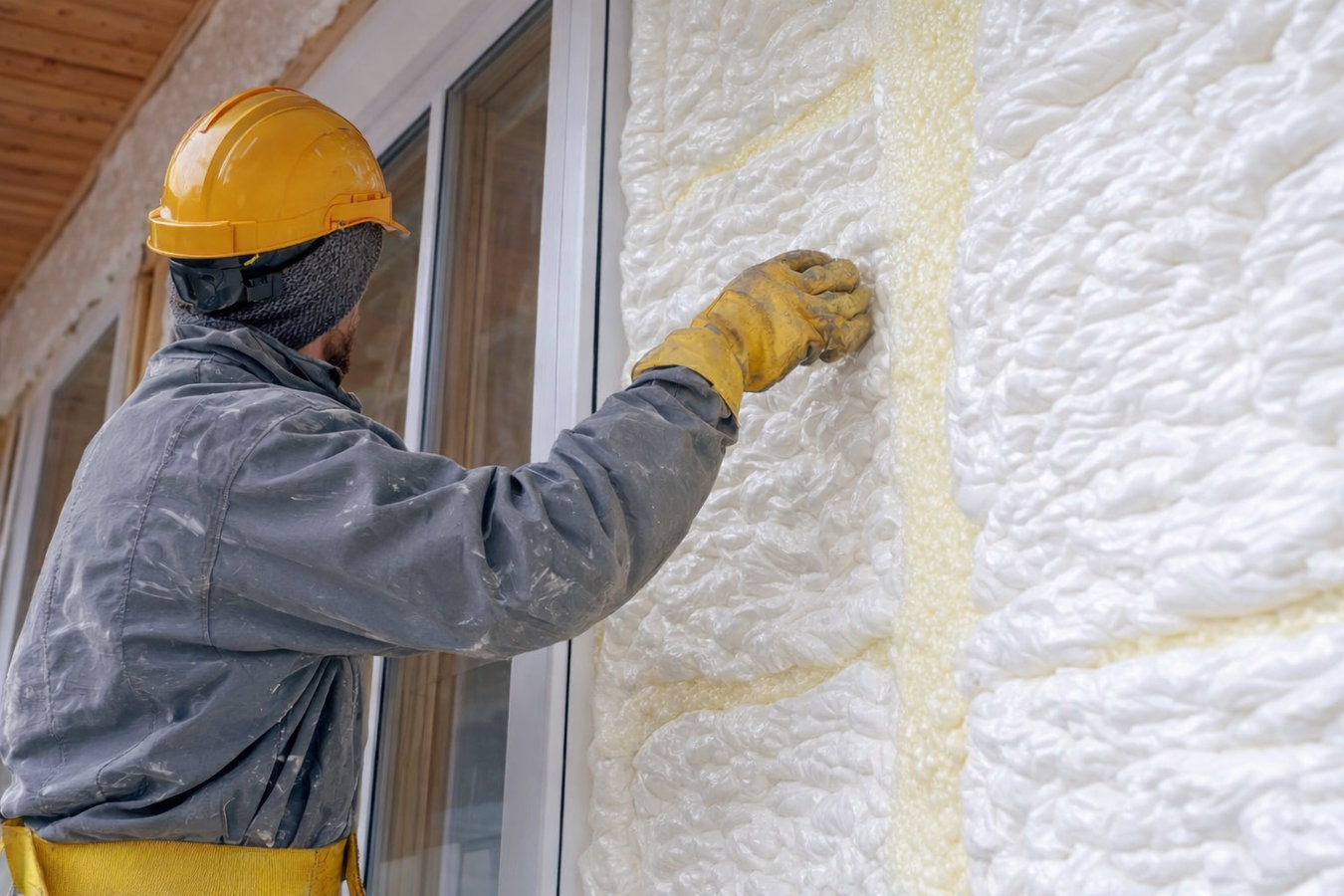
Mansfield clay soil shifts with every weather cycle, and on slab foundations - which every home in the city sits on - that movement gradually opens gaps at the sill plate and along the framing above. Spray foam seals those pathways and insulates at the same time, something loose-fill and batt products cannot do. It is the right choice for homes showing drafts along exterior walls or floors that run noticeably cold in winter.
Blown-in loose fill is the most efficient way to upgrade attic depth in Mansfield's large subdivision homes. It fills around HVAC ducts, electrical runs, and other obstructions that leave gaps in a batt installation, and it can be added on top of existing material in most cases. A half-day job can change how your home feels for every summer after.
In Mansfield homes with can lights in every room - standard in the subdivision builds of the 2000s - those fixtures are some of the largest air bypass points in the entire attic. Sealing them before adding insulation is not optional if you want the project to perform the way it should. Air sealing done first means every dollar of added insulation works at full efficiency.
The older properties near historic downtown Mansfield along Broad Street represent a different challenge than the newer subdivisions. Homes from the 1970s and 1980s often have wall cavities with little to no insulation and attics that were never upgraded. Retrofit insulation adds material to existing walls without a full tear-down, giving older Mansfield homes meaningfully better performance without a renovation-scale project.
Mansfield sits in Tarrant County, roughly 20 miles southeast of Fort Worth, and its population has grown from about 28,000 in 2000 to over 75,000 today. That growth was built primarily on single-family subdivision homes - most of them constructed between 1990 and 2015. Those homes are now 10 to 35 years old, which puts them squarely in the window where original builder-grade insulation has settled below the thresholds that the Department of Energy recommends for this climate zone. The combination of long, brutally hot summers and HVAC systems working overtime to compensate for under-insulated attics is the primary driver of high utility bills across the city.
Mansfield also has a meaningful commercial sector, with retail corridors and light industrial facilities along US-287 that face even more pressure from the Texas heat than residential buildings. Commercial roof decks in this climate absorb heat at rates that standard insulation packages from 10 or 15 years ago were not designed to handle at current energy costs. The Blackland Prairie clay soil under the entire city compounds the problem for both residential and commercial buildings - constant soil movement on slab foundations opens air pathways that let the Texas heat in through routes that insulation alone will not close. Getting both the thermal and the air sealing work right at the same time is what separates a good result from one that underperforms.
Our crew works throughout Mansfield regularly, and we understand the local conditions that affect insulation work here. The newer master-planned communities - the ones built by national homebuilders in the 2000s and 2010s - follow predictable patterns: brick-veneer fronts, two-car garages, two stories, and can lights in nearly every ceiling. Those patterns mean our assessments move quickly and our recommendations are consistent. The older properties near historic downtown Mansfield along Broad Street are a different story - those homes often have wall cavities that have never been insulated and attics that were touched last in the 1980s.
The commercial work along the US-287 corridor brings a different set of requirements. Retail and warehouse buildings here run their HVAC hard for seven or eight months a year, and an under-insulated roof deck shows up immediately on the electric bill. We also work with HOA-governed neighborhoods throughout the city, where exterior material approvals can be required before certain types of work begin - we factor that into our timeline estimates.
We serve homeowners in nearby Ennis to the southeast and in DeSoto to the northeast - two communities with their own distinct housing stock that we handle with the same local approach.
Call us or fill out our contact form. We ask a few questions about your property - type, size, age, and what has been prompting the call. We schedule an on-site visit, typically within one business day for Mansfield addresses.
We inspect the attic, measure current insulation depth, check for moisture or pest issues, and identify air bypass points. For commercial work, we walk the full space including any mechanical rooms and roof access points. You receive a written estimate specifying materials, scope, and total cost before any commitment.
On installation day, we seal all air gaps before adding any material - around can lights, plumbing penetrations, attic hatches, and sill plates where needed. Insulation goes in after the air barriers are complete. Most Mansfield attic jobs finish in two to four hours. Commercial jobs are staged to keep your operations running.
Before we leave, we walk you through the completed work and provide photos of the finished attic floor showing coverage and depth. We clean up the work area completely. If anything feels off in the days after the job, call us and we will come back.
Residential or commercial, we give every Mansfield customer a written scope of work, honest pricing, and a crew that shows up on time. Call or fill out the form and we respond within one business day.
(469) 881-8137Mansfield is a city in Tarrant County, about 20 miles southeast of Fort Worth and 15 miles south of Arlington. It has grown from a small community of around 28,000 in 2000 to over 75,000 residents today, driven by high-rated schools through Mansfield ISD, accessible pricing relative to the Fort Worth and Arlington cores, and good access to major employment centers via US-287. The city has a genuine small-town identity anchored by its historic downtown along Broad Street, even as the subdivisions and commercial corridors that have grown around it look very much like the rest of the DFW metro.
The housing mix reflects that layered growth. Neighborhoods near the original town center have homes from the 1970s and 1980s - brick and partial-brick construction on lots that are larger and more irregular than what you find in the newer subdivisions. Further out, communities built from the 1990s onward follow the standard North Texas pattern: slab foundations, brick-veneer fronts, two-story floor plans, and HOA oversight. We also serve homeowners in Lancaster to the east and in Cedar Hill to the northeast, where the housing stock presents similar conditions and the same climate challenges.
Creates an airtight seal that dramatically reduces energy loss in your home.
Learn MoreKeeps heat out in summer and warmth in during winter for year-round comfort.
Learn MoreFills gaps and cavities evenly for complete whole-home thermal coverage.
Learn MoreWhole-home insulation solutions that lower energy bills and improve comfort.
Learn MoreSafe removal of old or damaged insulation before new installation begins.
Learn MoreProtects floors and pipes while improving your home energy performance.
Learn MoreReduces heat transfer through exterior walls for a more comfortable interior.
Learn MoreSeals drafts and gaps to stop conditioned air from escaping your home.
Learn MoreControls moisture and temperature in your basement for a healthier home.
Learn MoreHigh-density foam offering superior R-value and moisture resistance.
Learn MoreFlexible, sound-dampening foam ideal for interior walls and ceilings.
Learn MoreEnergy-efficient insulation solutions for commercial and industrial buildings.
Learn MoreBlocks ground moisture from entering your crawl space and damaging your home.
Learn MoreProfessional vapor barrier installation to prevent moisture and mold problems.
Learn MoreAdds insulation to existing walls and spaces without major renovation work.
Learn MoreCall Advanced Ennis Insulation or submit a contact form and we will respond within one business day with honest pricing and a clear scope of work.