
Loading...
Serving Ennis, TX and surrounding areas. (469) 881-8137
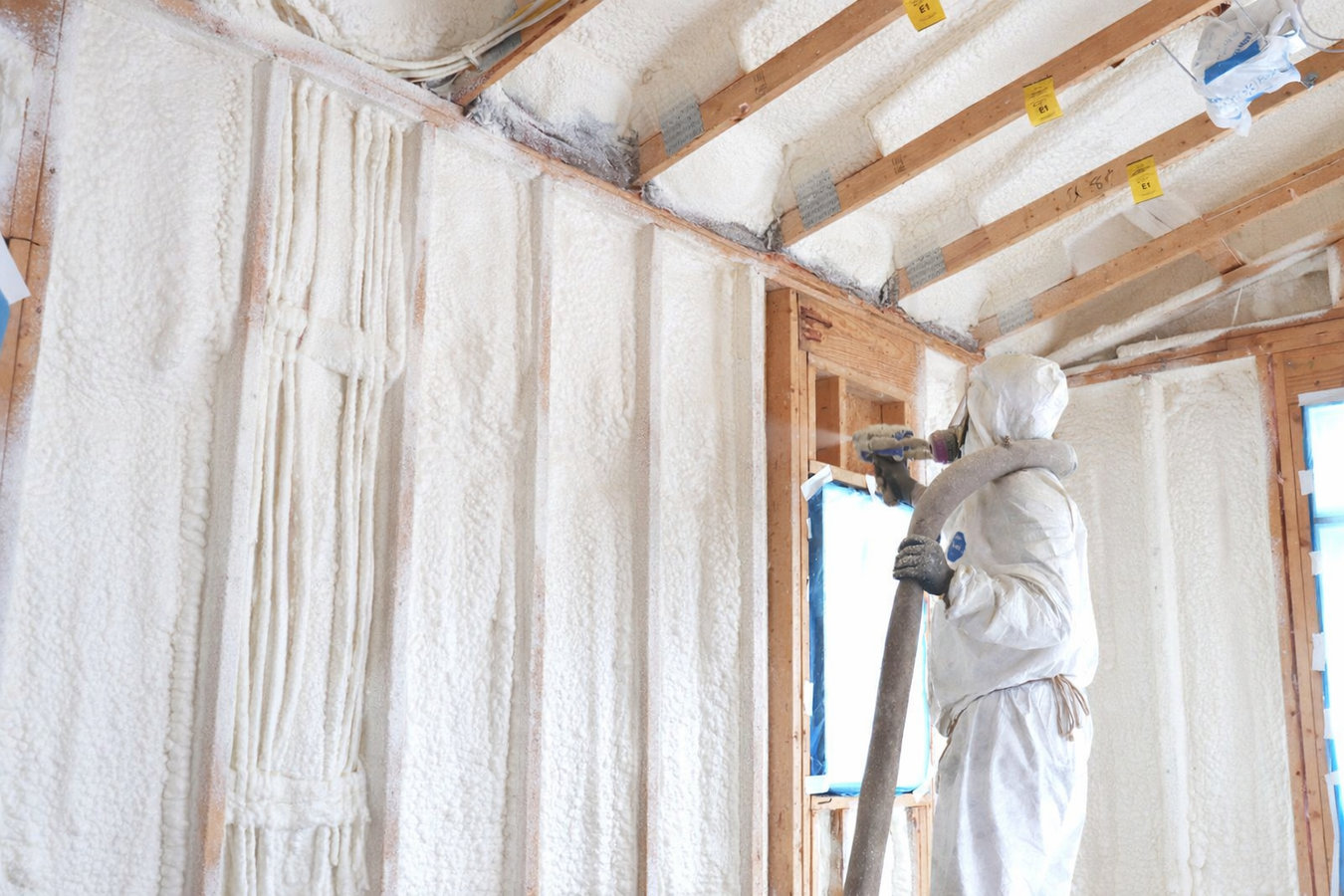
Closed-cell foam insulates and air-seals in one pass - stopping the heat and humidity that drive up your cooling bills every Ennis summer.
Closed-cell foam insulation in Ennis is sprayed as a liquid that expands and hardens into a dense, rigid layer within seconds, sealing gaps and providing high R-value per inch - most residential jobs in an attic or crawl space are completed in a single day.
Unlike fiberglass batts or blown-in cellulose, closed-cell foam acts as both an insulator and a moisture barrier. That combination matters a great deal in Ennis, where summer humidity is relentless and Ellis County clay soils push moisture upward through crawl spaces and foundation walls. Many homeowners come to us after years of high cooling bills or persistent musty smells that other insulation products never fully solved. This service pairs naturally with open-cell foam insulation for homeowners who want to understand both foam options before deciding which suits their space better.
The Spray Polyurethane Foam Alliance (SPFA) is the national trade association that sets installation standards and best practices for spray foam contractors. When foam is applied correctly by a trained crew, it can last the lifetime of the home without needing to be replaced or topped off.
If your electric bill climbs sharply in June and stays high through September even with the thermostat set steady, your home is likely losing conditioned air faster than your system can replace it. In Ennis, where summer heat is relentless, that pattern is one of the clearest signs that your insulation or air sealing is not doing its job. Closed-cell foam addresses both problems in a single application.
If some rooms feel significantly warmer than others on a hot afternoon even with the air conditioning running, conditioned air is escaping or hot outside air is getting in at specific spots. Rooms over a garage, at the end of a hallway, or directly under the roofline are common problem areas. That uneven temperature is a sign that closed-cell foam could seal the gaps driving it.
Ellis County clay soils hold water and that moisture migrates upward into unsealed crawl spaces. If you have noticed a musty smell in your home, seen condensation on pipes under the floor, or found soft spots in your flooring, moisture is entering from below. Closed-cell foam in the crawl space creates a sealed barrier that stops that migration at the source.
Homes built in Ennis before the mid-1990s were typically insulated to standards far below what is recommended today. Decades of settling, pest activity, and moisture exposure have often degraded whatever was originally installed. If you have never had the insulation in your attic or crawl space evaluated, there is a reasonable chance it is underperforming - and closed-cell foam can address that permanently.
We install closed-cell spray foam in attics, crawl spaces, exterior wall cavities, and rim joists. Every job starts with a site assessment that checks for moisture, pest damage, or existing insulation issues before any foam goes in. If the space needs air gaps sealed or old material removed, we address that first. Homeowners comparing foam types will find that spray foam insulation covers both open-cell and closed-cell options and explains where each is most appropriate.
We give you a written estimate that breaks down the area, the thickness being applied, and the total cost - not just a single number. You will know exactly what you are getting before you agree to anything, and we handle permit coordination when the scope of work requires it.
Suits homeowners with low-pitch attics or limited rafter depth where high R-value per inch matters most and standard batts would not provide enough coverage.
Suits homeowners dealing with moisture migration from Ellis County clay soils - the foam seals the floor structure and eliminates ground moisture as a source of musty odors.
Suits homeowners doing targeted wall upgrades in older Ennis homes where blown-in or batt insulation has settled or degraded over the years.
Suits any homeowner whose home has gaps where the floor framing meets the foundation wall - a common source of drafts and heat loss in mid-century Ennis construction.
Ennis sits in North Central Texas where summer temperatures regularly push past 100 degrees and humidity stays high from May through September. That combination means your air conditioner is fighting heat and moisture at the same time, and any gap in your insulation or air barrier is costing you real money every month during cooling season. Closed-cell foam addresses both in one application - higher R-value per inch than any batt product, plus a moisture barrier that fiberglass alone cannot provide. Homeowners in Midlothian and Corsicana face the same hot-humid climate and see the same results when closed-cell foam is installed correctly.
Ellis County also has a significant number of homes built between the 1960s and 1980s that still have their original fiberglass batt insulation - or no insulation at all in the crawl space. Insulation from that era was installed to standards far lower than what is recommended today, and decades of settling and moisture exposure have often degraded whatever was there. North Texas also sees active severe weather from late winter through spring, and many homeowners discover insulation problems after a storm exposes the attic. Scheduling foam work after storm season repairs are complete - typically late spring or early fall - means you are sealing a home that is already in good condition.
Call or submit a request and you will hear back within one business day. We ask a few basic questions - the type of space you want insulated, the age of your home, and any previous insulation work. This lets us come prepared with the right equipment and give you a realistic time estimate before we arrive.
We walk through the area to be insulated, measure it, check for moisture or pest damage, and assess any existing insulation. You receive a written estimate that breaks down cost by area, specifying thickness - not just a single number - so you know exactly what you are paying for.
Depending on scope, we may need to pull a building permit from the City of Ennis before work begins. We handle that step for you. Before the crew arrives, you will need to clear the work area and arrange to be out of the home for the day along with any pets.
The crew seals off the work area, applies foam in passes until the correct thickness is reached, and inspects the finished surface before leaving. The foam cures fully within 24 hours and any odor clears in 24 to 72 hours. We walk you through the finished work and answer questions before we pack up.
Free estimate with no obligation. We reply within one business day and walk you through every option before any work starts.
(469) 881-8137Spraying closed-cell foam over a damp surface traps moisture where you cannot see it. We check every space for water intrusion before we quote the job. If there is a moisture issue, we tell you honestly - and we will not start the insulation work until it is resolved.
We work across Ennis and Ellis County and understand how the local combination of extreme heat, humidity, and clay soil interacts with attics, crawl spaces, and older home construction. Our recommendations reflect what actually performs well here, not a generic approach copied from a different climate.
We pull required permits before work begins and coordinate any required inspections, so the job is on the record. You get a written estimate up front and documentation of what was done when we finish.
Unlike fiberglass batts that settle and degrade over years, properly installed closed-cell foam hardens into a permanent layer that does not sag, shift, or need to be replaced. That longevity is a key reason the upfront cost is higher - you are paying for something you will likely never have to do again.
Every closed-cell foam project starts with a real site assessment and ends with a walkthrough showing you what was done. We stand behind the work, and because we are local, we are easy to reach if anything ever needs attention.
The ENERGY STAR program provides guidance on air sealing and insulation benchmarks that a properly installed closed-cell foam job should meet or exceed.
A softer, more flexible foam option that works well in interior walls and attics where a moisture barrier is less critical - useful context when comparing foam types.
Learn MoreAn overview of all spray foam applications we offer, covering which foam type and location combination makes the most sense for your home.
Learn MoreFall and early spring book fast in Ennis. Schedule your free assessment now and have your home sealed before the next cooling season.